History
History
NAP and DACE
NAP and the Dutch Association of Cost Engineers (DACE), are closely connected. Both foundations share the same Treasurer and Director, and until 2008, the Chair of NAP also served as Chair of DACE. In earlier years, the ties were even closer, with DACE operating as a working group within NAP for many years.
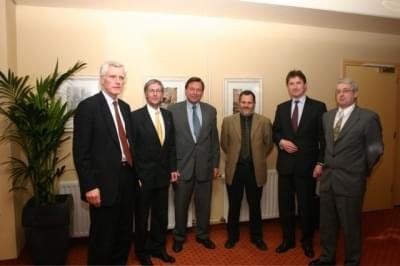
DACE - E.F. Boon
DACE is known in the process industry, among other things, for its 'Prijzenboekje' (Price Booklet), a useful tool for preparing cost estimates. Both the working group and the Price Booklet were initiatives of E.F. Boon, Professor of Chemical Engineering at Delft University of Technology, who was also one of the founders of NAP.
Shortly after the Second World War, Boon worked as a young and ambitious civil engineer for the Bataafsche Petroleum Maatschappij in Curaçao. During this period of post-war expansion, many new process installations were being built, but every penny had to be carefully considered before being spent. His supervisor asked him to prepare a cost estimate for the construction of a gas processing plant.
When the project was completed, it became clear that Boon had underestimated the costs. A subsequent estimate for the construction of a factory was also exceeded, much to his supervisor's frustration. Boon realised that cost estimating was a discipline in its own right, a skill he had never been taught during his studies in Delft.
He resolved that if he ever became a professor, he would teach his students how to prepare cost estimates. Boon was given that opportunity in 1949 at Delft University of Technology. "One of my objectives was to teach my students better what I myself had either not been taught or had been taught poorly." The Royal Netherlands Society of Engineers supported his ambition with a report comparing higher technical education in the Netherlands and the United States. Unlike in the Netherlands, budgeting was given considerable importance in the United States, as were planning and scheduling. This expertise had been developed, among other things, through the construction of major infrastructure projects, such as the Hoover Dam, during the Great Depression of the 1930s.
During the Second World War, major projects such as synthetic rubber production had to be completed within very short timeframes and within the estimated budget. Another example was the Manhattan Project, the United States' programme to become the first to develop an atomic bomb. The report concluded that students in Dutch higher technical education needed to develop greater 'cost awareness'. Education in Delft and at higher technical colleges therefore needed to be adapted.
To put these educational reforms into practice, Boon wanted to collaborate with the chemical industry in the Netherlands. "This was important because technical higher education can best be served by information obtained directly from industry." Boon was also committed to supporting industry itself.
In 1952, he organised a series of lectures by experienced cost estimators from the chemical industry at Vochema, the predecessor of Machevo, addressing economic issues in this industrial sector. Considerable attention was devoted to the question of how to estimate the costs of new factories. He encouraged those involved to establish a working group to study such issues. This led to the formation of the permanent Working Group on Economic Issues in the Chemical Industry (Wepci).
Wepci
In 1959, Wepci published its first Prijzenboekje, (Price Booklet), which would continue to be published regularly up to the present day. It was based on an internal price booklet used by AKU, containing indicative prices for materials and surface treatments. AKU granted permission for its booklet to be used as the basis for the Wepci Price Booklet. J.H. van der Torren, then Director of engineering consultancy Tebodin, clearly remembers the booklet:
“As an engineering consultancy, we purchased a great deal of equipment for industry. We also prepared cost estimates, which naturally had to be accurate, but when requesting quotations, we always received basic prices. If we wanted to purchase a 10,000-litre tank, we were not told that the price excluded the necessary accessories, such as an inlet pipe here, an outlet pipe there, a drain or a sight glass that still needed to be installed. This was in the equipment manufacturer's interest, as they wanted to quote the lowest possible price for competitive reasons. But it meant that the actual price was always much higher than the quoted price." The Price Booklet provided a solution. Although it was a small, thin booklet, it was invaluable because the prices listed were complete prices, including the sight glass, drain, and inlet and outlet pipes. This enabled us to prepare accurate and comprehensive cost estimates.”
Publishing the Price Booklet involved a considerable amount of work. As a result, the need arose for a professional secretariat. At Boon's suggestion, Wepci therefore joined NAP. This provided NAP with an additional active and valuable working group.
In 1967, Wepci decided to change its name to the Working Group on Cost Estimating Issues in the Chemical Industry (Webci). The working group believed that this name better reflected its area of expertise: the techniques of cost estimating.
DACE and the Professionalisation of the Cost Engineer
The history of DACE can be described as part of the process of professionalisation of the cost engineering profession, a development that is still ongoing. Well-known examples of professions that underwent professionalisation at an early stage include doctors, lawyers, engineers and notaries. Professionalisation goes hand in hand with the emancipation of a profession. This emancipation can take various forms, such as establishing a professional association, developing professional expertise, seeking recognition, improving the quality of education and training, and raising the status of the profession.
The first professional association for cost engineers was established in the United States. In the early 1950s, American industry, particularly oil refineries and the chemical industry, had to make commercial and economic decisions based on increasingly complex technology. This was beyond the expertise of accountants and professional managers at the time. There was a growing need for engineers who understood the costs and profitability of new projects. Through articles from the University of New Hampshire on cost estimating techniques and data, Chemical Engineering Costs Quarterly became the focal point of a movement of cost engineers seeking to establish their own organisation.
In 1956, the University of New Hampshire founded the American Association of Cost Engineers (AACE). Other industrialised countries soon followed this example, including the United Kingdom in 1961 with the Association of Cost Engineers (ACostE). To encourage and improve international cooperation, AACE, ACostE and SMIEFC (Sociedad Mexicana de Ingenieria Economica Financiera y de Costos), together with Webci, established an umbrella organisation in 1976: the International Cost Engineering Council (ICEC).
In 1977, Webci acquired a new identity by becoming a separate foundation, the Nederlandse Stichting voor Kostentechniek (Dutch Foundation for Cost Engineering), known in English as the Dutch Association of Cost Engineers (DACE). This gave Dutch cost engineers their own professional association.
Initially, the ties with NAP remained close. Both organisations continued to share the same Director, Treasurer and Chair. B.J. Kruidering, Director of NAP and DACE from 1995 to 2003, recalled: "When I became Director, there was a great deal of synergy between the two organisations. DACE was well placed within the NAP network."
Nevertheless, differences between the organisations grew. NAP largely consisted of board members and directors focusing on industrial policy. DACE consisted of engineers and cost engineers who wanted to take their profession to a higher level. DACE worked to improve the quality of the cost engineering profession in various ways, for example by organising conferences and seminars.
In 1984, DACE published the first instalment of the extensive loose-leaf Handboek Cost Engineers (Cost Engineers Handbook). This handbook, which addressed cost estimating issues relating to the construction of installations for the process industry and commercial and institutional buildings, was an attempt to fill a gap, as cost engineering was not taught as a separate subject at higher technical colleges (HTS) or universities of technology (TH). Typically, someone would be assigned by management to prepare a cost estimate or a schedule and would then have to figure out how to do it independently. DACE therefore successfully advocated for a dedicated cost engineering training programme.
In 1985, the Institute of Higher Professional Education in Haarlem launched a two-year evening course in Cost Engineering, certified by DACE. The students, most of whom had completed higher technical education (HTS) and were employed in industry or government, attended classes two evenings a week. The programme covered the technical, economic, legal and organisational aspects of Cost Engineering. All lecturers were employed by companies participating in DACE. The course has since been further developed and has been offered under the auspices of HAN University of Applied Sciences since 2003. The programme has been and continues to be regularly accredited by ICEC. The diploma is internationally recognised.
In response to increasing demand from industry for short, focused courses, DACE introduced a six-day course entitled 'Introduction to Cost Engineering' at the University of Twente in 1995. The course covered topics involved in preparing cost estimates for investments in the process industry.
In 2002, DACE expanded its course offerings with a two-day programme entitled 'Value Engineering & Value Analysis'. The aim of Value Engineering is to achieve an optimal balance between price and product. How can the desired functionality be achieved at minimum cost? The application of Value Engineering to existing products is known as Value Analysis.
Today, DACE offers a broader and more varied range of courses (see Training and Education).
In 2008, DACE appointed its own Chair, A. Rol, a Project Manager at Movares. This decision can be seen as another step towards transforming DACE into a fully-fledged professional association. DACE continues to develop through an increasing number of Special Interest Groups, a growing number of active participants at networking meetings, encouraging cross-fertilisation between SIGs and sectors, promoting the writing of articles for the professional journal COSTandVALUE, and establishing partnerships with other national and international professional organisations.
On 1 November 2012, Robert de Vries, employed by Stork, succeeded Arno Rol as Chair of DACE.
In 2012, edition 29 of the DACE Price Booklet was published, followed by edition 30 in 2014. With edition 30, the familiar DACE Prijzenboekje, containing indicative prices for industrial process installations and building structures, underwent a transformation after almost 45 years and was renamed the DACE Price Booklet in 2014. In May 2014, the Price Booklet was published in English, both as a printed booklet and, for the first time, as a web-based version. Edition 31 followed in 2015.
At the end of 2014, DACE took a step into a new era with a new logo and website. On 27 November 2014, DACE launched its new logo and website, www.dace.nl. For 25 years, a traditional coin had been the symbol of DACE (Dutch Association of Cost Engineers). From 2014 onwards, the redesigned website was online, and the new logo reflected the three key elements of project management: time, cost and scope. With a nod to this Triple Constraint, a distinctive 3D model was designed, taking its shape from a framework of structural elements representing Value Management, project control and interaction (networking). The Escher-like design illustrates the dilemmas faced by cost engineers.
At the end of 2015, DACE established a completely renewed knowledge base. This knowledge base makes it easy to find a wide range of documents and files of great value to Cost Engineers and Value Managers.
In recent years, several new SIGs have been established within DACE, including SIG Cost Engineering for Mechanical Engineering & Manufacturing (SIG CEMM) and, in cooperation with NVBK, SIG High Complexity Buildings (SIG HCB). There are now eight SIGs, with SIG Planning having been established in April 2016. DACE is also working on establishing DACE Young Professionals. This new DACE Special Interest Group (YP) is primarily intended to support young professionals in their development as a Person, Professional and Participant in the value chain (the 3Ps).
In addition, DACE is developing a renewed Certified Cost Engineer training programme. Until mid-2016, this programme was offered at HAN University of Applied Sciences, without the possibility of taking individual modules. The new English-language CCE programme is being prepared for the future and will have a more modular structure, with the aim of reducing its duration to just over one year.
The number of DACE's own courses and training programmes has grown considerably: Essentials of Cost Engineering, Essentials of Project Cost Control, Basic Training in Value Management (twice a year), VM Advanced 1 & 2 and the LEAN workshop.
The networking meetings are more lively than ever. The number of participants has grown from an average of 50 to over 90. Relevant and engaging themes are often explored from several perspectives: those of asset owners/clients, engineering consultancies and suppliers/contractors. They are also frequently approached from the different sectors represented within DACE: the process industry, civil engineering and infrastructure, and mechanical engineering/manufacturing. This broadens understanding and leads to lively discussions.
Source: De Kracht van de keten, NAP en de Nederlandse procesindustrie 1960–2010 (The Strength of the Chain, NAP and the Dutch Process Industry 1960–2010). Click here to order the anniversary publication.