
Cost Control in Mechanical Engineering and Manufacturing
Cost Control in Mechanical Engineering and Manufacturing
About SIG-CEMM
The mission of the new SIG is to promote Cost Engineering techniques, tools and methods in the high-tech mechanical engineering and manufacturing industries. Within the SIG, we share knowledge and best practices, explore topics in greater depth, and communicate results within DACE and to the industry.
Considerable attention is also given to practical applications: by visiting participating companies and learning from their working methods, we gain valuable insights into applying methodologies under different business conditions.
Another important objective is to raise awareness of Cost Engineering and Value Engineering within the manufacturing industry, thereby strengthening the Dutch manufacturing ecosystem and making it more future-proof.
History SIG-CEMM
Until a few years ago, the mechanical engineering and manufacturing industries had only limited involvement with DACE, which had its roots in the process industry. However, these industries also proved to be very welcome when initiator Gerrit van Dijk (VMI) approached former DACE Director Julius Freutel in early 2013.
On 28 November 2013, the Special Interest Group "Cost Engineering for Mechanical Engineering & Manufacturing", or SIG CEMM, was established within DACE.
At the official founding meeting of SIG CEMM, DACE Chair Robert de Vries noted that this was the third sector-wide SIG within DACE, bringing together an entire value chain around the field of Cost Engineering. The aim was to look beyond one's own business environment, share knowledge and experiences, and gain inspiration from developments in other industries and disciplines.
Since then, SIG CEMM has established a clear position within DACE, organised numerous meetings and visited many companies.
Topics within SIG-CEMM
SIG CEMM focuses on the following topics:
1. Design as a cost-driver
- Design-to-Cost
- How to determine costs at different levels: function, design specification and building block
- Change control: maintaining control over the design process
- Cost control of variants/configuration management
2. Supply chain management
- Collaborating with suppliers to reduce costs
- Control versus trust in relationships with suppliers
- Using optimal cost prices and learning curves to achieve these prices
- Granularity: having suppliers deliver complete modules
3. Internal and External Organisation of the Cost Engineer and the Cost Engineering Process
- The position of the Cost Engineer within the organisation
- Involvement in sales, design, procurement and implementation
4. Tools and Approaches for Cost Engineering
- Software tools for Cost Engineering
- Understanding cost drivers internally and at suppliers (desired level of detail)
- Processes and templates
- Best practices
Personal Development as a Cost Engineer and Value Engineer
Many SIG CEMM members also seek personal and professional development as Cost Engineers or Value Engineers.
Important guiding questions that are discussed include:
- How can you develop as a Cost Engineer and Value Engineer? What are the connections between these roles?
- A Cost Engineer can work in many different areas: where do your competencies lie, and what motivates you?
- Are there typical career paths for Cost Engineers and Value Engineers in the manufacturing industry, and how can these be facilitated?
- Soft skills are extremely important: value is a multidisciplinary concept and therefore involves different perspectives. What role can the Cost Engineer play in connecting these perspectives?
The SIG uses various models for this purpose. One example is the "Cost Engineering Maturity Growth Matrix".
The Maturity Growth Matrix has two axes: the vertical axis describes the complexity of the Cost Engineer's field of work, ranging from individual operations and products to complex, customer-specific projects. The horizontal axis refers to professional maturity.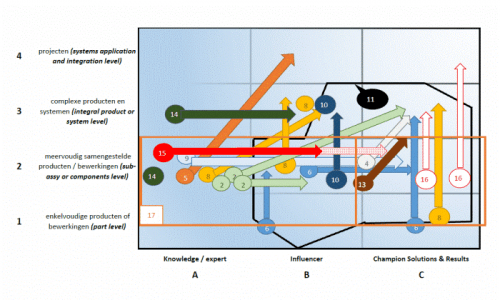
Discussions on these topics, aimed at the further development of the Cost Engineering and Value Engineering professions, will remain an important item on the agenda of upcoming SIG CEMM meetings.
Interested in joining?
The benefit of participating in SIG CEMM is the opportunity to develop knowledge in the specific field of Cost Engineering within the mechanical engineering and manufacturing industries. The topics discussed are interesting and encourage everyone to think critically about their own working methods. In addition, the SIG provides an excellent network for exploring specific questions in greater depth with colleagues from other companies.
SIG Meetings
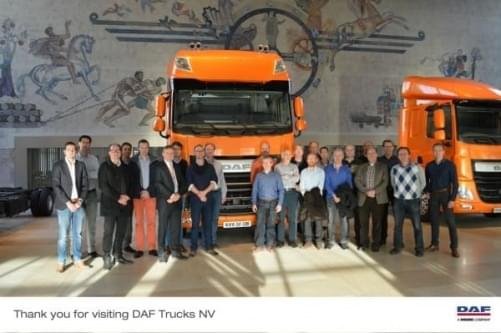
The SIG meets approximately three times a year at the premises of participating companies. This provides valuable insight into the companies and how Cost Engineering is applied in practice.
Contact DACE if you would like to know more about DACE and SIG CEMM.
The following companies participate in SIG CEMM:
- ADSE Consulting and Engineering
- ASML
- AWL Techniek
- BDR Thermea
- Cost Engineer
- DAF Trucks
- Fokker Aerostructure
- I4Value
- Koninklijke Auping
- Lutrateam
- Marel Townsend Further Processing
- Philips
- Siemens
- Value FM
- VMI Holland BV
- Weir Minerals Netherlands
Contact
For general contact details, click here.